
Rat Repellent for Farms: Protect Stored Grains and Standing Crops Naturally
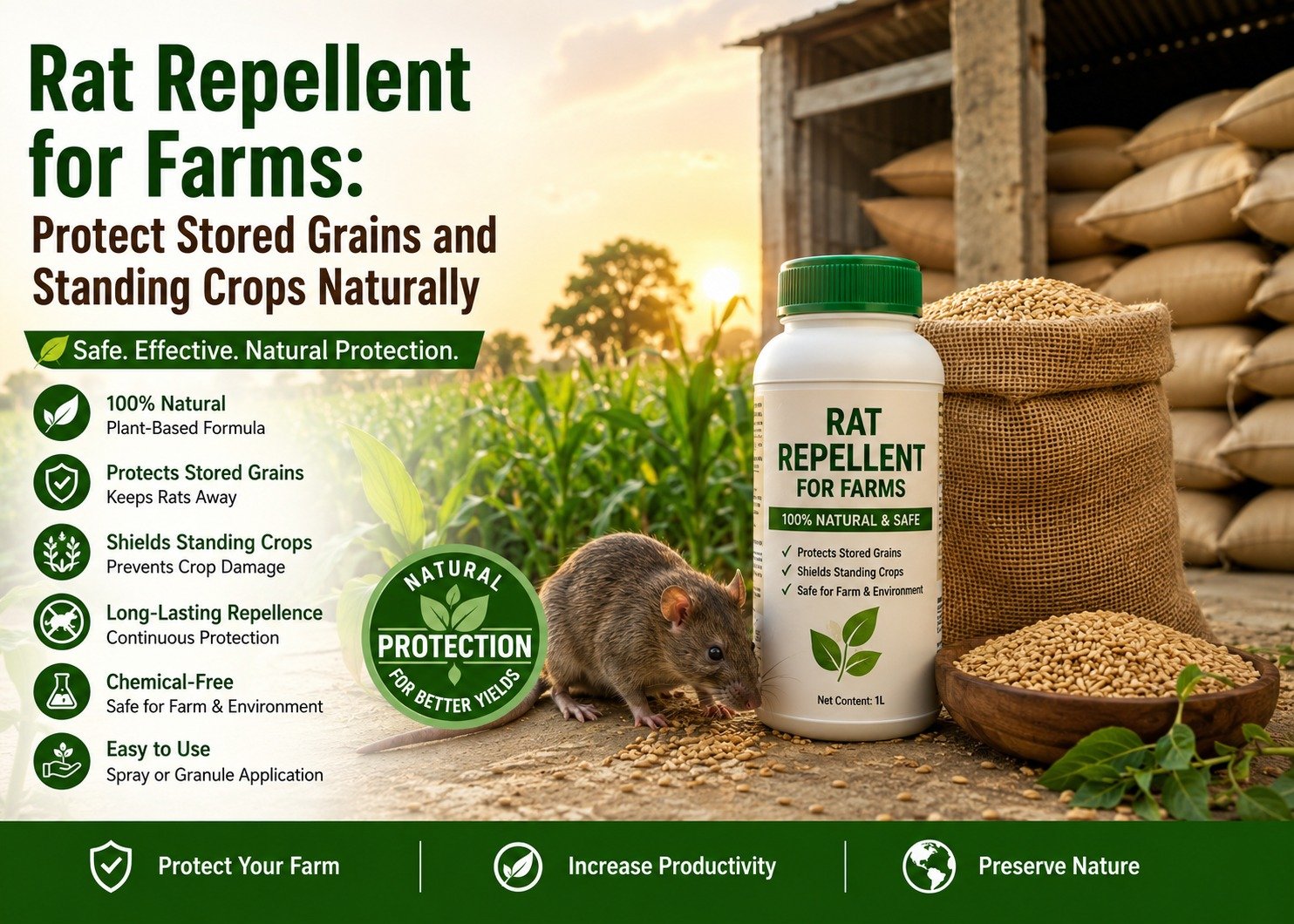
Organic Rat Repellent for Farms: A Natural Solution for Crop and Grain Protection
Rats may be small, but the damage they cause on farms can be massive. From destroying standing crops to contaminating stored grains, rodents are responsible for significant agricultural losses every year. Farmers often struggle to protect their harvests without relying heavily on toxic chemicals that can harm the environment, livestock, and even human health.
This is where an organic rat repellent for farms becomes a game-changer. By using natural and herbal solutions, farmers can effectively keep rodents away while maintaining a safer and more sustainable farming environment. Whether you are protecting warehouses filled with grains or safeguarding crops in the field, natural rodent management is becoming the preferred choice for modern agriculture.
Why Rats Are a Serious Threat to Farms
Rats are among the most destructive pests in agriculture. They feed on crops, damage irrigation systems, chew through storage bags, and contaminate food supplies with droppings and urine. A single rodent infestation can quickly multiply, resulting in substantial economic losses.
Some common damages caused by rodents include:
- Loss of stored grains and seeds
- Damage to standing crops such as rice, wheat, maize, and sugarcane
- Contamination of agricultural produce
- Spread of diseases among livestock and farm workers
- Destruction of farm infrastructure and storage facilities
This is why effective rodent control agriculture practices are essential for every farm.
Benefits of Using Organic Rat Repellents
Traditional rodenticides may provide temporary relief, but they come with several risks. Poisoned rodents can harm pets, birds, and other wildlife. Chemical residues may also affect soil quality and water sources.
An organic rat repellent for farms offers several advantages:
1. Environmentally Friendly
Natural formulations help reduce chemical pollution and protect beneficial organisms in the ecosystem.
2. Safe Around Livestock
Herbal repellents can be used near animals without the risks associated with toxic rodenticides.
3. Sustainable Pest Management
Organic solutions support long-term pest control strategies without creating resistance in rodent populations.
4. Better Grain Protection
Natural repellents help maintain the quality and safety of stored agricultural products.
Farmers looking for effective grain protection methods are increasingly choosing herbal alternatives over chemical treatments.
How Herbal Rat Repellents Work
Unlike poisons that kill rodents, herbal repellents focus on driving them away naturally. These products typically contain plant-based ingredients with strong odors or tastes that rodents find unpleasant.
The repellents create an invisible barrier around crops, warehouses, and storage areas, making the environment unattractive to rats and mice.
This approach aligns perfectly with modern herbal pest management practices, where prevention is prioritized over extermination.
Areas Where Organic Rat Repellents Can Be Used
Organic rat repellents are versatile and can be applied across various agricultural settings.
Application Area | Benefits |
Grain Storage Warehouses | Prevents contamination and grain loss |
Seed Storage Units | Protects valuable planting materials |
Standing Crops | Reduces feeding damage from rodents |
Poultry Farms | Keeps rodents away from feed storage |
Dairy Farms | Minimizes contamination risks |
Farm Boundaries | Creates a protective barrier against rodent entry |
Using an organic rat repellent for farms across these locations helps establish comprehensive farm protection.
Best Practices for Natural Rodent Management
To achieve the best results, organic repellents should be part of a broader rodent management strategy.
Maintain Clean Storage Areas
Remove spilled grains and food sources that attract rodents.
Seal Entry Points
Inspect warehouses and storage rooms for holes, cracks, and gaps.
Monitor Rodent Activity
Regularly check for signs such as droppings, gnaw marks, and burrows.
Use Herbal Repellents Consistently
Consistent application improves effectiveness and helps maintain a rodent-free environment.
Rotate Protection Methods
Combining repellents with sanitation and monitoring provides stronger protection.
These practices strengthen rodent control agriculture programs and help farmers reduce crop losses naturally.
Why Farmers Are Switching to Herbal Pest Management
Today’s farmers are becoming increasingly aware of the risks associated with excessive chemical use. Sustainable agriculture requires solutions that protect crops while preserving environmental health.
Herbal pest management offers a practical alternative by:
- Reducing chemical exposure
- Supporting eco-friendly farming
- Improving food safety
- Protecting biodiversity
- Enhancing long-term farm sustainability
As consumer demand for safer agricultural practices grows, natural rodent control methods are gaining widespread acceptance.
The Future of Natural Rodent Control in Agriculture
The future of farming lies in sustainable pest management. As regulations become stricter and environmental awareness continue to grow, natural alternatives will play a larger role in agricultural operations.
An organic rat repellent for farms not only helps reduce crop damage but also contributes to safer food production and healthier farming practices. By integrating natural repellents into daily farm management, farmers can achieve effective rodent control agriculture while supporting environmental sustainability.
For farmers seeking dependable solutions, AgriSheild provides innovative products designed to protect crops, stored grains, and agricultural investments naturally. Adopting these methods today can help secure better harvests and reduce losses in the future.
To explore sustainable herbal pest management solutions and advanced grain protection strategies, farmers can rely on AgriSheild for effective and eco-friendly farm protection.
Frequently Asked Questions (FAQs)
1. What is an organic rat repellent for farms?
An organic rat repellent for farms is a natural product made from plant-based ingredients that discourages rodents from entering agricultural areas without using toxic chemicals.
2. How does herbal pest management help control rats?
Herbal pest management uses natural ingredients with strong odors or tastes that repel rodents, making crops and storage areas less attractive to them.
3. Can organic rat repellents be used around livestock?
Yes, most organic rat repellents are designed to be safer around livestock compared to conventional chemical rodenticides.
4. Are organic repellents effective for grain protection?
Yes, they can help prevent rodent access to stored grains, reducing contamination and losses when used as part of a comprehensive pest management plan.
5. Why is rodent control important in agriculture?
Effective rodent control helps prevent crop damage, protects stored grains, reduces disease risks, and improves overall farm productivity.