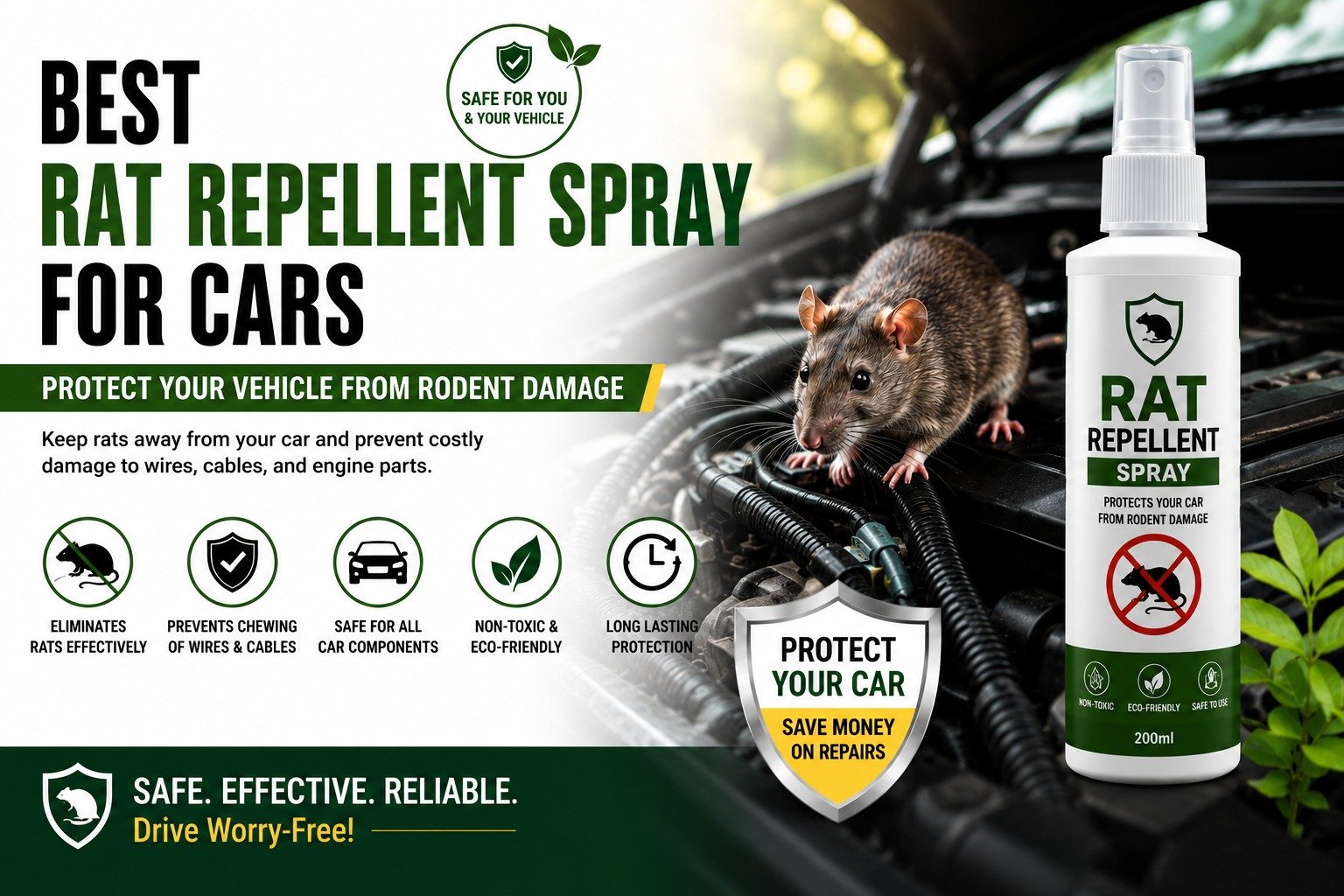
Best Rat Repellent Spray for Cars: Protect Your Vehicle from Rodent Damage
Introduction
If you’ve ever opened your car’s bonnet and found chewed wires, nesting materials, or signs of rodents, you’re not alone. Rats and mice often seek shelter inside parked vehicles, especially during colder months or rainy seasons. Using a Rat Repellent Spray for Cars is one of the most effective ways to keep rodents away and prevent costly repairs.
Rodents can damage electrical wiring, insulation, hoses, and engine components, leading to unexpected breakdowns and expensive maintenance. Fortunately, an Anti Rat Spray for Car offers a safe, non-lethal, and easy-to-use solution. In this guide, we’ll explain why rodents enter vehicles, how repellent sprays work, and the best practices for long-lasting Car Rat Protection.
Why Do Rats Enter Cars?
Cars provide warmth, protection from predators, and plenty of hiding places. Modern vehicles also contain soy-based wire coatings, which may attract rodents to chew on electrical cables.
Common reasons rats enter vehicles include:
- Warm engine compartments
- Safe shelter during rain or winter
- Food crumbs left inside the car
- Nearby garbage or vegetation
- Long periods without vehicle movement
These habits make it important to use a Rat Repellent Spray for Cars, especially if your vehicle is parked outdoors or in areas with frequent rodent activity.
Why Choose an Anti Rat Spray for Car?
Traditional rat traps or poisons may not be practical or safe around vehicles. They can also create hygiene issues if rodents die inside the engine compartment.
An Anti Rat Spray for Car provides several advantages:
- Non-lethal rodent deterrent
- Easy to apply on engine compartments
- Helps prevent wire chewing
- Safe for regular vehicle maintenance
- Suitable for most cars, SUVs, and commercial vehicles
- Convenient for home and office parking
Regular application significantly improves Car Rat Protection, reducing the risk of costly damage.
How Does a Rodent Repellent Spray Work?
A Rodent Repellent Spray uses natural ingredients or strong fragrances that rodents dislike. Instead of harming rats, the spray creates an environment that discourages them from nesting or chewing vehicle components.
Most sprays are applied to:
- Engine compartment
- Rubber hoses
- Plastic covers
- Vehicle corners
- Parking areas (where recommended by the manufacturer)
When used correctly, a Rat Repellent Spray for Cars forms part of an effective rodent prevention strategy.
Signs That Rats Have Entered Your Vehicle
Early detection helps prevent major repairs. Watch for these warning signs:
- Chewed electrical wires
- Bite marks on rubber hoses
- Rat droppings under the bonnet
- Nesting materials like paper or leaves
- Unusual engine warning lights
- Strange noises from the engine compartment
- Unpleasant odours inside the vehicle
If you notice any of these signs, inspect your vehicle immediately and apply a Rodent Repellent Spray after cleaning the affected area.
Common Areas That Need Car Rat Protection
|
Vehicle Area |
Possible Rodent Damage |
Recommended Protection |
|
Engine compartment |
Chewed wiring and hoses |
Apply repellent spray regularly |
|
Battery area |
Nesting and chewing |
Inspect and spray carefully |
|
Air filter housing |
Nest building |
Clean and protect |
|
Firewall insulation |
Bite marks |
Apply spray around surrounding areas |
|
Parking space |
Frequent rodent movement |
Keep area clean and reduce food sources |
|
Garage corners |
Rodent hiding spots |
Maintain cleanliness and use preventive measures |
Best Practices for Using Rat Repellent Spray for Cars
Applying the spray properly increases its effectiveness.
1. Clean the Engine Bay
Remove leaves, dust, food debris, and nesting materials before applying the spray.
2. Apply to Key Areas
Spray around engine components, wiring, rubber parts, and entry points as directed by the product instructions.
3. Reapply Regularly
For continuous Car Rat Protection, reapply the spray every few weeks or after washing the engine, depending on the manufacturer’s recommendations.
4. Move the Vehicle Frequently
Cars left unused for long periods are more likely to attract rodents.
5. Keep Parking Areas Clean
Avoid leaving garbage, pet food, or clutter near where your vehicle is parked.
Following these practices alongside a quality Rat Repellent Spray for Cars provides better long-term protection.
Why Choose a Natural Rodent Repellent Spray?
Many vehicle owners now prefer natural or herbal solutions over chemical poisons. A quality Rodent Repellent Spray offers several benefits:
- Eco-friendly formulation
- Non-toxic when used as directed
- Pleasant fragrance compared to harsh chemicals
- Safe for regular vehicle maintenance
- Discourages rodents without harming them
Choosing an Anti Rat Spray for Car supports a safer and more environmentally responsible approach to rodent control.
Seasonal Tips for Better Car Rat Protection
Rodent activity changes throughout the year. Adjust your prevention routine accordingly.
During Monsoon
- Inspect the engine compartment frequently.
- Keep parking areas dry and clean.
- Reapply the spray after heavy rain or engine cleaning.
During Winter
- Warm engine bays attract rodents.
- Park in well-lit areas whenever possible.
- Use the spray consistently to maintain protection.
During Long-Term Parking
If your vehicle won’t be used for several days or weeks:
- Start the engine periodically.
- Inspect under the bonnet before driving.
- Apply fresh Rat Control Spray before storing the vehicle.
How to Choose the Best Rat Control Spray
Before purchasing a product, look for these important features:
- Natural or herbal ingredients
- Long-lasting protection
- Easy spray application
- Safe for engine compartments
- Suitable for all vehicle types
- Non-staining formulation
- Pleasant or mild fragrance
The right Rat Control Spray should help reduce rodent activity without affecting your vehicle’s components when used according to the instructions.
Additional Tips to Prevent Rodent Damage
Along with using a Rat Repellent Spray for Cars, these habits can further reduce the chances of rodent infestation:
- Avoid eating inside the vehicle if possible.
- Remove food wrappers and waste promptly.
- Trim vegetation around parking areas.
- Seal garage entry points where rodents may enter.
- Inspect the engine bay during routine servicing.
- Contact a pest control professional if rodent activity is severe.
A combination of preventive measures offers the most reliable Car Rat Protection.
Conclusion
Rodent damage can lead to expensive repairs, unexpected breakdowns, and unnecessary stress for vehicle owners. A dependable Rat Repellent Spray for Cars is a practical and effective solution for keeping rats away from your vehicle’s engine compartment and wiring.
By using an Anti Rat Spray for Car, maintaining a clean parking environment, and inspecting your vehicle regularly, you can significantly reduce the risk of rodent damage. Choosing a high-quality Rodent Repellent Spray as part of your maintenance routine ensures better Car Rat Protection and helps extend the life of your vehicle while avoiding costly repairs.
Frequently Asked Questions (FAQs)
1. What is the best Rat Repellent Spray for Cars?
The best spray is one that uses natural or herbal ingredients, provides long-lasting protection, and is safe for use on vehicle engine compartments when applied as directed.
2. How often should I apply an Anti Rat Spray for Car?
Most products should be reapplied every few weeks or after engine cleaning. Always follow the manufacturer’s instructions for the best results.
3. Can a Rodent Repellent Spray damage my car?
Quality products designed specifically for vehicles are generally safe when used according to the directions. Avoid spraying directly on sensitive electrical connectors unless recommended by the manufacturer.
4. Does Rat Control Spray kill rats?
No. Most modern repellent sprays are designed to discourage rodents from entering or nesting in vehicles rather than killing them.
5. What else can I do for better Car Rat Protection?
Keep your parking area clean, drive the vehicle regularly, inspect the engine compartment often, remove food waste, and use a reliable rat repellent spray as part of your routine vehicle maintenance.