How to Protect Crops from Wild Boars: Proven Methods That Actually Work
Introduction
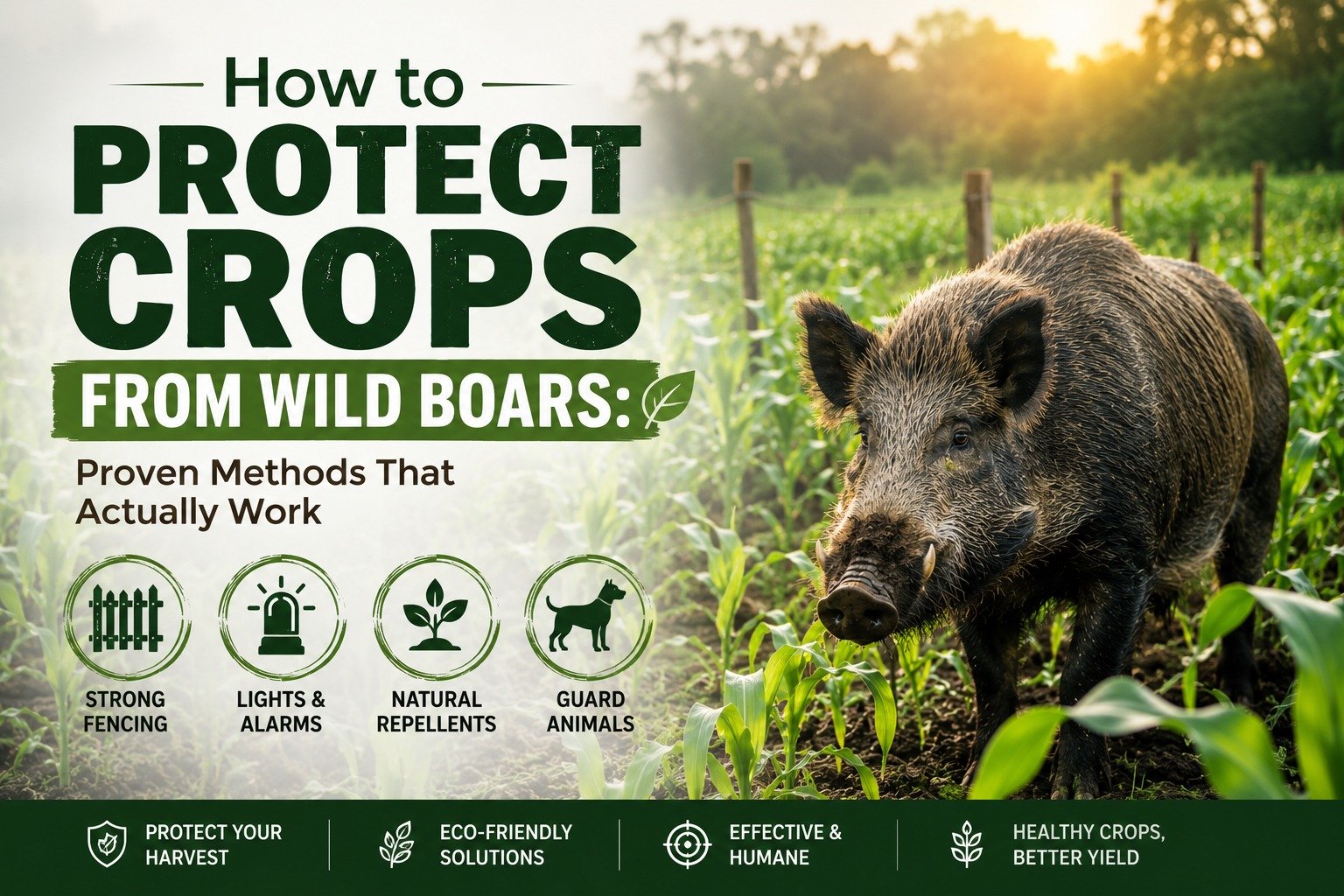
Wild boars are among the most destructive animals for farmers, causing significant crop losses every year. If you’re looking for ways to Protect Crops from Wild Boars, you’re not alone. Across India, wild boar attacks on agricultural fields have become increasingly common, damaging paddy, maize, sugarcane, vegetables, groundnuts, and fruit orchards. Their ability to dig, trample, and feed on crops can wipe out months of hard work in just one night.
Fortunately, there are effective and humane solutions available today. From adopting preventive farming practices to using a reliable Wild Boar Repellent, farmers can significantly reduce crop damage without harming wildlife. In this guide, we’ll explore proven methods that actually work and help you protect your fields throughout the year.
Why Are Wild Boars a Growing Problem?
Wild boars are highly adaptable animals with a strong sense of smell and excellent survival instincts. As forests shrink and food becomes scarce, they often move closer to agricultural lands in search of easy food sources.
Common crops targeted by wild boars include:
- Paddy (Rice)
- Maize (Corn)
- Sugarcane
- Groundnuts
- Potato
- Sweet Potato
- Banana
- Tapioca
- Vegetable Crops
- Fruit Orchards
Besides feeding on crops, they also uproot plants, damage irrigation systems, and trample large sections of farmland.
Understanding Wild Boar Damage to Crops
Wild Boar Damage to Crops is often more severe than many farmers expect. Unlike smaller pests that consume only parts of plants, wild boars can destroy entire fields by rooting through the soil and trampling standing crops.
Some of the common signs include:
- Uprooted plants
- Deep hoof marks
- Dug-up soil
- Broken irrigation pipes
- Flattened crop rows
- Partially eaten fruits and vegetables
The economic impact can be substantial, especially during harvest season.
Why Wild Boar Control Is Important
Ignoring wild boar activity can lead to repeated crop losses year after year.
Effective Wild Boar Control helps farmers:
- Reduce crop losses
- Protect their investment
- Improve agricultural productivity
- Reduce stress during growing seasons
- Support long-term farm sustainability
The goal is not to harm wildlife but to prevent animals from entering cultivated areas.
Proven Methods to Protect Crops from Wild Boars
Several methods can help reduce wild boar intrusion. Combining multiple strategies usually delivers the best results.
Protection Method | Benefits | Best For |
Wild Boar Repellent | Discourages boars naturally | Farms, orchards, vegetable fields |
Solar Fencing | Physical barrier | Large agricultural fields |
Wire Fencing | Long-term protection | High-value crops |
Motion Sensor Lights | Startles animals at night | Small farms and gardens |
Farm Hygiene | Reduces attractants | All agricultural properties |
Community Monitoring | Early detection | Rural farming communities |
Using more than one method creates a stronger defense against wild boars.
Use a Reliable Wild Boar Repellent
One of the safest and most practical ways to reduce crop damage is by using a Wild Boar Repellent. These repellents work by creating an environment that wild boars find unpleasant, encouraging them to avoid treated areas.
Compared to harmful trapping or illegal hunting methods, repellents offer a more sustainable and environmentally responsible solution.
Benefits include:
- Humane wildlife management
- Easy application
- Suitable for different crop types
- Helps reduce repeated farm visits
- Supports sustainable agriculture
Choosing an Organic Wild Boar Repellent is an excellent option for farmers who prefer environmentally friendly farming practices.
Install Physical Barriers
Fencing remains one of the most effective forms of Wild Boar Control, particularly for farms located near forests.
Popular options include:
- Solar fencing
- Chain-link fencing
- Stone boundary walls
- Reinforced wire fencing
Regular maintenance is essential, as wild boars are strong animals capable of exploiting weak sections of fencing.
Maintain Clean Farm Boundaries
Wild boars prefer areas that provide shelter and easy access to food.
Reduce their interest by:
- Removing thick bushes
- Clearing weeds
- Cleaning crop residues
- Managing waste properly
- Keeping storage areas secure
A well-maintained farm is less attractive to wildlife.
Use Motion-Based Deterrents
Modern farms increasingly use technology to discourage wild boars.
Examples include:
- Motion sensor lights
- Flashing LED deterrents
- Automatic sound devices
- Water sprinklers activated by movement
Although animals may eventually adapt to repetitive sounds, combining these with a Wild Boar Repellent improves effectiveness.
Crop Planning Can Help
Certain crops attract wild boars more than others.
Where practical, farmers can:
- Plant less attractive crops along field boundaries.
- Create buffer zones.
- Rotate crops regularly.
- Harvest mature crops promptly.
These practices reduce the chances of prolonged wildlife activity.
Why Choose an Organic Wild Boar Repellent?
Many farmers now prefer an Organic Wild Boar Repellent because it aligns with sustainable farming principles.
Advantages include:
- Eco-friendly ingredients
- Non-lethal approach
- Safer for agricultural environments
- Supports biodiversity
- Suitable for repeated application
- Easy to integrate into regular farm management
Using organic solutions helps balance crop protection with wildlife conservation.
Why Farmers Trust AgriSheild
Protecting crops requires practical, reliable solutions that work in real farming conditions.
AgriSheild develops innovative pest and wildlife management solutions designed to help farmers reduce crop losses while supporting environmentally responsible agriculture. Their products are developed with a focus on effectiveness, ease of application, and sustainable farming practices, helping farmers better manage wildlife challenges without harming the surrounding ecosystem.
Additional Tips on How to Stop Wild Boars
If you’re wondering How to Stop Wild Boars from repeatedly entering your fields, combine repellents with preventive farming practices.
Helpful tips include:
- Inspect fields regularly.
- Repair damaged fences immediately.
- Harvest crops on time.
- Avoid leaving harvested produce overnight.
- Work with neighboring farmers to monitor wildlife movement.
- Reapply repellents according to product recommendations.
A proactive approach delivers better long-term protection.
Conclusion
Learning how to Protect Crops from Wild Boars is becoming increasingly important for farmers across India. As wild boar populations expand and agricultural lands border forest areas, crop protection requires more than traditional methods.
Using a dependable Wild Boar Repellent, maintaining secure farm boundaries, installing physical barriers, and following good farm management practices can significantly reduce Wild Boar Damage to Crops. Farmers looking for sustainable and humane solutions can also benefit from using an Organic Wild Boar Repellent as part of an integrated Wild Boar Control strategy.
With proper planning and the right preventive measures, you can protect your crops, reduce losses, and ensure a more productive farming season.
Frequently Asked Questions (FAQs)
1. What is the best way to protect crops from wild boars?
A combination of fencing, farm maintenance, and a reliable Wild Boar Repellent provides the most effective protection against wild boar damage.
2. What crops do wild boars damage the most?
Wild boars commonly damage paddy, maize, sugarcane, vegetables, groundnuts, banana plantations, and fruit orchards.
3. Is an Organic Wild Boar Repellent safe for farms?
Yes. Most organic repellents are designed for agricultural use and can be safely applied according to the manufacturer’s instructions.
4. How often should a Wild Boar Repellent be applied?
Application frequency depends on the product and weather conditions. Reapply as recommended, especially after heavy rainfall.
5. Can Wild Boar Control be achieved without harming animals?
Yes. Humane methods such as repellents, fencing, motion deterrents, and proper farm management help reduce wild boar activity while protecting wildlife and supporting sustainable agriculture.