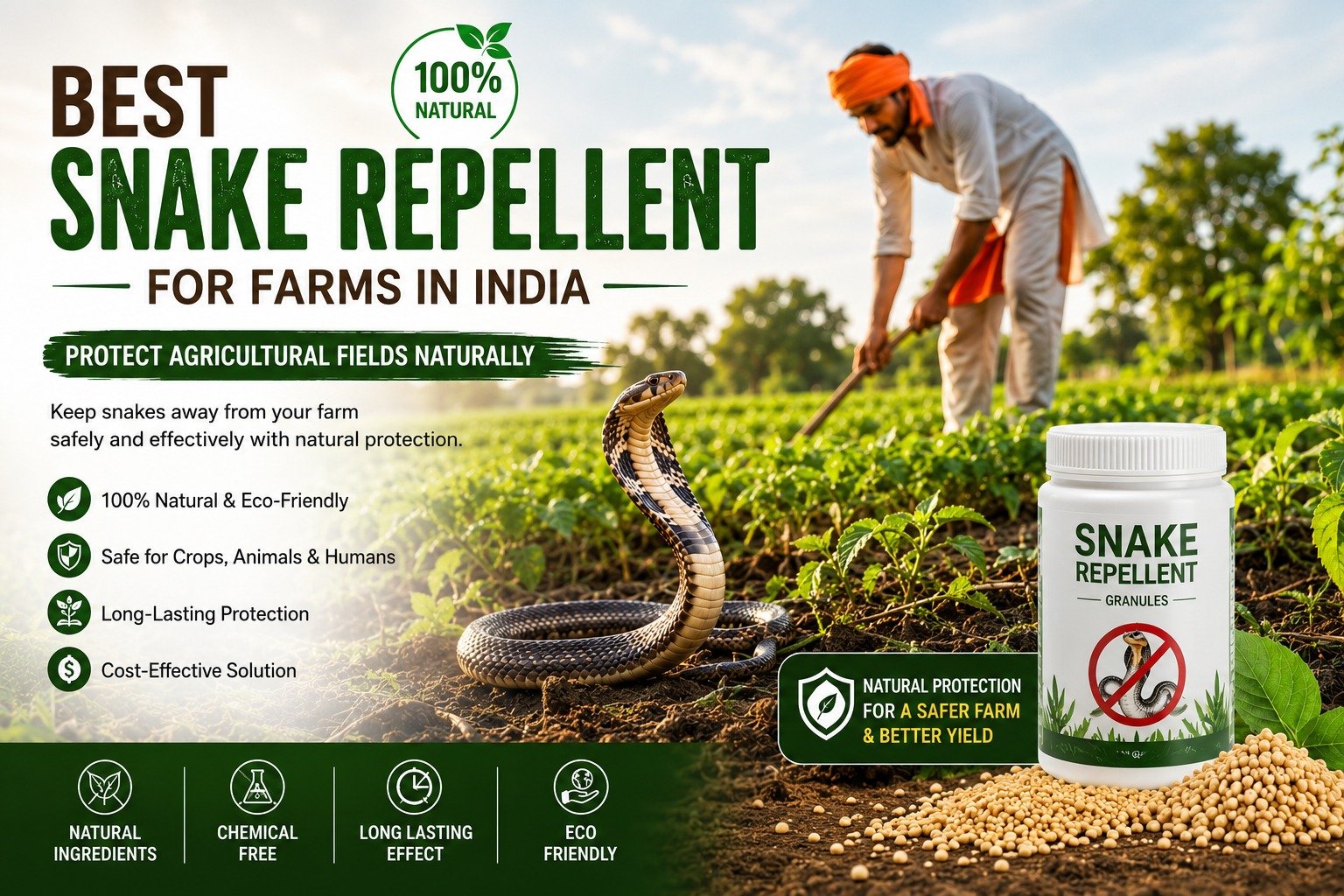
How Organic Animal Repellents Help Farmers Increase Crop Yield

Introduction
Agriculture has always been a battle against unpredictable challenges. While farmers often focus on weather conditions, soil health, and pest management, one major issue is frequently overlooked—wildlife intrusion. From wild boars and monkeys to deer and stray animals, crop damage caused by animals can significantly reduce farm productivity and lead to financial losses.
This is where organic animal repellent for crops solutions are making a real difference. Farmers across the country are increasingly adopting eco-friendly repellents to protect their fields without harming wildlife or the environment. By reducing crop losses and supporting sustainable farming practices, organic repellents are becoming an essential part of modern agriculture.
The Growing Problem of Wildlife Crop Damage
Wild animals often enter agricultural fields in search of food and water. A single visit from a herd of wild boars or a group of monkeys can destroy weeks or even months of hard work. In many farming regions, crop damage caused by wildlife has become a recurring issue, affecting both small-scale and large-scale farmers.
Apart from the direct loss of crops, farmers also spend considerable time and money on guarding fields, building barriers, and implementing temporary solutions. Unfortunately, many conventional methods are either ineffective or environmentally harmful.
The need for long-term wildlife crop damage prevention strategies has never been greater.
What Is an Organic Animal Repellent?
An organic animal repellent for crops is a natural solution designed to discourage animals from entering agricultural fields. Unlike chemical-based repellents, organic repellents use plant-based ingredients, natural scents, and environmentally safe formulations that repel animals without causing harm.
These products are specifically developed to create an unpleasant experience for animals while remaining safe for crops, soil, beneficial insects, and surrounding ecosystems.
As sustainable farming gains momentum, many farmers are choosing organic repellents as part of their broader approach to sustainable agriculture.
How Organic Animal Repellents Increase Crop Yield
1. Reduced Crop Losses
The most direct benefit of using organic repellents is the reduction of crop damage. When animals are effectively deterred from entering fields, crops can grow undisturbed and reach their full potential.
Whether farmers grow vegetables, fruits, grains, or plantation crops, minimising wildlife intrusion leads to healthier plants and improved harvests.
2. Better Farm Productivity
When farmers spend less time protecting fields from animal attacks, they can focus on other important agricultural activities such as irrigation, nutrient management, and crop monitoring.
Improved protection contributes directly to higher farm productivity, allowing farmers to maximise the return on their investments and labour.
3. Environmentally Responsible Protection
One of the biggest advantages of an organic animal repellent for crops is that it aligns with environmentally conscious farming practices.
Unlike harmful chemicals, organic repellents do not contaminate soil or water sources. They help farmers maintain ecological balance while still achieving effective wildlife crop damage prevention.
4. Cost-Effective Long-Term Solution
Repeated crop losses can significantly impact farm profitability. Investing in preventive measures often proves more economical than dealing with recurring damage.
Many farmers have found that integrating organic repellents into their crop protection strategy results in lower losses and higher yields over time.
Why Sustainable Agriculture Needs Organic Repellents
The future of farming depends on balancing productivity with environmental responsibility. Sustainable farming practices aim to protect natural resources while ensuring food security for growing populations.
Organic repellents support sustainable agriculture by:
- Protecting crops without harming wildlife
- Reducing dependence on chemical-based solutions
- Preserving soil and water quality
- Supporting biodiversity
- Encouraging ethical farming practices
As awareness about environmental conservation increases, more farmers are seeking practical solutions that protect both their crops and the ecosystem.
Choosing the Right Organic Animal Repellent
Not all repellents deliver the same results. Farmers should look for products that are:
- Environmentally safe
- Easy to apply
- Suitable for multiple crop types
- Effective against common wildlife threats
- Backed by field-tested performance
Several agricultural innovators are focusing on developing advanced wildlife management solutions. For example, platforms like Agrisheild provide information and solutions designed to help farmers tackle animal-related crop damage while promoting sustainable farming practices.
Farmers interested in learning more about natural wildlife protection methods can explore the resources available at Agrisheild.
Real Benefits Experienced by Farmers
Across various agricultural regions, farmers using organic repellents report several positive outcomes:
- Lower crop damage rates
- Improved harvest quality
- Increased crop yield
- Reduced labour requirements for field protection
- Greater confidence in managing wildlife challenges
By combining good agricultural practices with effective organic animal repellent for crop solutions, farmers are better equipped to protect their investments and improve overall farm performance.
Organisations such as Agrisheild continue to support the agricultural community by promoting innovative and environmentally friendly approaches to wildlife management.
The Future of Wildlife Management in Agriculture
As human populations grow and natural habitats continue to change, interactions between wildlife and farmland are likely to increase. This makes proactive protection strategies more important than ever.
The adoption of organic repellents represents a practical and sustainable solution that benefits farmers, consumers, and the environment alike. By preventing animal-related crop losses and supporting farm productivity, these solutions help create a more resilient agricultural sector.
Farmers looking for modern, eco-friendly crop protection options can find valuable guidance and insights through resources offered by Agrisheild, helping them move toward more sustainable and profitable farming practices.
Conclusion
Protecting crops from wildlife is a critical challenge for modern agriculture. Traditional methods often fall short, while harmful chemical solutions can create additional environmental concerns.
An organic animal repellent for crops offers a safer, more sustainable alternative. By reducing crop losses, improving farm productivity, and supporting wildlife crop damage prevention, organic repellents play an important role in the future of sustainable agriculture.
As more farmers embrace environmentally responsible farming methods, organic repellents are proving to be a valuable tool for increasing crop yield while maintaining harmony between agriculture and nature.
FAQs on Monkey Repellent for Farms
1. What is an organic animal repellent for crops?
An organic animal repellent is a natural, eco-friendly product designed to deter animals from entering agricultural fields without causing harm to wildlife, crops, or the environment.
2. How do organic repellents help increase crop yield?
They reduce crop damage caused by animals, allowing plants to grow healthier and reach their full production potential, ultimately increasing harvest yields.
3. Are organic animal repellents safe for the environment?
Yes. Most organic repellents are formulated using natural ingredients and are designed to be safe for soil, water, beneficial insects, and surrounding ecosystems.
4. Can organic repellents be used on all types of crops?
Many organic repellents are suitable for a wide range of crops, including vegetables, fruits, grains, and plantation crops. Farmers should always follow product-specific recommendations.
5. Where can farmers learn more about wildlife crop protection solutions?
Farmers can explore educational resources and sustainable wildlife management approaches through platforms such as Agrisheild and other agricultural solution providers.